
Attendance in practice
Attendance Is Not a Register. It Is an Early Warning System.
Nearly every school records attendance. Almost none uses it. Marking present is the cheap part; the value is in what the pattern means and who acts on it. This is a working guide to what an attendance management system for schools should actually do — the honest trade-offs of every capture method, the messy edges, the audit trail, and what to make any vendor prove live.
Marking present is the cheap part
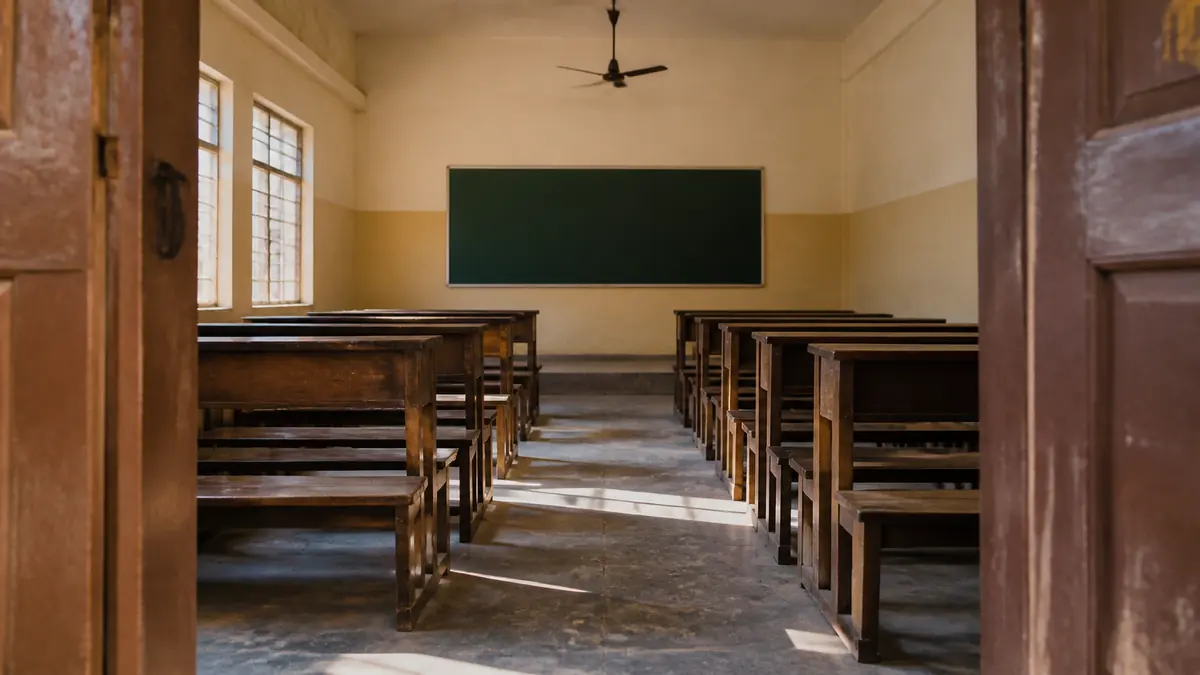
Walk past any classroom in India at five past eight and you will hear it: names called, hands raised, a tick against each one. The ritual is universal. What happens to those ticks is not. In most schools they travel into a register or an app, add up to a monthly percentage, and are never looked at again — until an inspection, a board form, or a worried parent forces someone to add them up. The recording is diligent. The reading is missing.
Here is the frame this whole post rests on. A mark is data — one fact about one child on one day. A pattern is a signal — the same child absent every Monday, or three times in a single week. And a signal without a named owner is noise: if no specific person is responsible for seeing it and acting on it, the school has an archive, not an early warning system. Software can find the pattern. Only a named human can act on it.
This guide is written for the people who live with attendance daily — class teachers, coordinators, principals, and the trustees who answer for the numbers. It covers which patterns are worth catching, how each capture method really behaves, what Indian data protection law changes for biometric data about children, why corrections need an audit trail, and what to make any vendor prove in a live demo. It is meant to be useful even if you never buy software from us.

The patterns a register cannot show you
Start with the signals, because they decide everything else — what you capture, how often, and who gets told. A threshold is simply a line agreed in advance: the point at which an absence pattern stops being routine and someone must look. The value of a threshold is not the number you pick. It is that crossing it creates a task for a named person, today, instead of a regret at the end of term.
None of these rules needs clever technology. They need the marks to live in one place where weeks, bus routes, and fee records can be compared — and a rule that turns a crossed line into a task on a specific person’s list. That is the whole difference between an attendance management system and a digital register. The register stores marks. The system reads them, and tells someone whose job it is to care.
- A third absence in the same week. One absence is life. Three in a week is a question the class teacher should ask the family before the weekend, not after the exam.
- A day-of-week pattern. A child absent most Mondays, or absent in the days after every fee reminder goes out, is telling you something no single mark can.
- A slow slide towards board eligibility. Most boards require a minimum attendance for examination eligibility, and the exact requirement varies by board. The time to notice a child drifting towards that line is months early, while there are still school days left to recover.
- Attendance that contradicts other records. A child marked present who never boarded the morning bus, or marked absent while transport says otherwise, deserves a same-day question — it may be a data error, or it may be a safety issue.
- A cluster, not a child. Half a class absent on the same day says something about the day — weather, transport, a local event — and should not trigger thirty separate family follow-ups.
Every way of capturing attendance fails somewhere
Schools often ask which capture method is best, and the honest answer is that each one trades away something different. Paper is cheap and fails silently. Apps are quick and fail with the network. Biometrics are hard to fake and slow at the gate. The useful question is not ‘which is best’ but ‘which failure can we live with’ — and whether the system above the device notices when the device lies, queues, or dies.
Two failure modes cut across every method. The first is proxy marking — one person marking another as present, whether that is a friend answering a roll call or a card handed over at the gate. The second is the silent gap: a network drop, a wet sensor, a skipped register page, after which nobody can say whether the blank means absent or simply unrecorded. A good system treats a gap as a gap, never as an absence, and says so plainly on the screen.
- Paper registers. Cheap, familiar, and they work in a power cut. But patterns are invisible across pages, totals are re-added by hand, corrections are overwrites, and the book can be lost. Fine for capture; useless for reading.
- Teacher app marking. Fast, period-aware, and it puts the mark where a pattern rule can see it. But it depends on classroom connectivity and teacher discipline — a period skipped on a busy morning becomes a silent gap unless the system flags unmarked periods by itself.
- Biometric fingerprint. Very hard to proxy. But queues build at the gate at peak time, wet or worn fingers fail on rainy mornings and after games, and the rejection list — children the sensor refused — needs a manual fallback that is itself honestly recorded.
- RFID or card tap. Quick, inexpensive per child, barely a queue. But cards are lost, forgotten, and — every school discovers this eventually — swapped or carried in by a friend. A tap proves the card arrived, not the child.
- Face recognition. No queue, nothing to carry. But it is the heaviest privacy commitment a school can make about children’s data, accuracy shifts with lighting and age, and under Indian data protection law it deserves the most serious scrutiny of all — more on that next.
Biometric data about children carries real legal weight
A fingerprint template or a face scan is not like a roll number. It is part of the child’s body, it cannot be reissued if it leaks, and it identifies them for life. India’s Digital Personal Data Protection Act, 2023 treats children’s personal data with particular care — broadly, it expects verifiable parental consent, a clear purpose, and real accountability from whoever holds the data. This article is not legal advice, and the details matter; before any biometric rollout, put the question to your counsel, in writing.
The practical questions are ones any serious vendor can answer. What exactly is stored — a raw image, or a mathematical template that cannot be turned back into a picture? Where is it stored, and in which country? Who at the vendor can access it? What happens when a child leaves the school — is the data deleted, and can you prove it? How we think about these questions for our own platform is written up on the security page at squarecampus.com/security/, and any vendor you evaluate should be able to hand you an equivalent document.
Keep proportion in mind, too. If what you actually need is the pattern — who is drifting, who crossed a line, who follows up — a teacher-marked record on an ordinary attendance system often delivers it without touching biometric data at all. Capture hardware should be chosen for the problem it solves at your gate, not because it is the most futuristic thing in the demo. The lightest method that closes your real gap is usually the right one.

Decide what ‘present’ means before you buy anything
Day-wise attendance records one mark per child per day — was the child in school? Period-wise attendance records a mark for every lesson — was the child in this class? The difference sounds academic until a senior student is present at the gate and missing from the last two periods. Primary sections mostly need day-wise. Senior secondary, with electives and labs, usually needs period-wise. A system should support both at once, class by class, rather than forcing one model on the whole school.
The edges matter more than the marks. A child arriving twenty minutes late is not absent, but repeated late arrivals are a signal in their own right. A half-day for a medical appointment is not the same as an unexplained afternoon disappearance. And an approved leave — an absence sanctioned in advance, with a reason on record — must be counted differently from an unexplained absence, or your percentages will quietly punish the child whose family did the paperwork.
- Late arrival: recorded as its own state with a time, not silently converted into present or absent.
- Half-day: which sessions were missed, and whether the pattern of half-days is itself being watched.
- Approved leave: applied for in advance, approved by a named role, and visible as leave in every report.
- Medical leave: often treated separately by boards when computing examination eligibility — the system should report it separately, with supporting documents attached to the record.
- Examination attendance: boards set minimum attendance requirements for exam eligibility and the requirements vary — the system must compute eligibility the way your board counts it, including how each type of leave is treated, not the way the vendor’s default assumes.
Corrections are where an audit trail earns its keep
Every school corrects attendance. A teacher marks the wrong row. A child arrives after the register closes. A parent calls to say the absence was an approved leave that never got entered. Correction is normal — the question is whether it is visible. In a paper register, a correction is an overwrite; six months later nobody can say what the original mark was, who changed it, or why. When examination eligibility hangs on the total, that invisibility becomes a dispute.
This is what an audit trail is for: a permanent record of who changed what, when, and why, kept alongside the record itself. With one, a correction strengthens the data — the mark is fixed and the fix is signed. Without one, every correction quietly weakens it, because anyone who can edit the register can rewrite the term. When a family challenges an eligibility calculation, the school that can show the full history of every mark has a conversation. The school that cannot has a crisis.
The test is simple and worth running in every demo. Change a mark from absent to present, then ask to see what the system remembers. It should show the old value, the new value, the person, the timestamp, and a reason. It should show this to the right roles without a support ticket. And it should make silently erasing that history impossible for ordinary users. If the vendor hesitates on this, hesitate on the vendor.
Give every signal a named owner
Pattern detection without ownership produces a dashboard nobody opens. The structure that works is an escalation ladder agreed in advance: the class teacher owns the first conversation with the family; the coordinator owns the pattern that persists past that conversation; the principal owns the case that touches eligibility, safety, or fees. Each rung is a person with a name, a list, and a timeframe — not a committee. Software’s job is to put the right signal on the right list, and to show honestly whether it was acted on.
This is where SquareCampus stands in the picture — deliberately not at the gate. We build a School Operating System: a governed operating layer where attendance, fees, transport, and academics live as one record, so a pattern can be read across all of them and routed to a named owner, with an audit trail underneath every change. Your existing biometric or card hardware stays in place and stays authoritative for capture; a bounded deployment coexists with the ERP and devices you already run, and consolidating tools later is your choice, not our condition. What the record means, and who acts on it, is the layer we govern. How that fits together is on the platform page at squarecampus.com/platform/.
One honesty note about the AI now appearing in this space, ours included. AEGIS, our intelligence layer, is designed to surface attendance patterns to the people whose role entitles them to see them — role-scoped, grounded in the school’s own records, auditable, and read-only in its first version. It does not predict which child will drop out, it does not diagnose anyone, and it decides nothing about a child. It points; a named human decides. Any vendor whose AI claims more than that about children should be asked to show exactly how — our own answers are at squarecampus.com/aegis/.
Make the vendor demonstrate it live
A scripted demo shows you the happy path: a full class, a working network, a clean register. Your school does not run on the happy path. So bring your messy reality to the demo and ask to see it handled live, on screen, with no slides. And whatever you are shown, ask who — which named role — receives each alert, because a notification without an owner is the unread dashboard all over again.
If a vendor can do all of this live, you are looking at an early warning system. If they can only show percentages on a dashboard, you are looking at a register with better fonts. We are happy to be put through the same list — bring it to a working session via squarecampus.com/demo/ and hold us to every line of it. The demo worth trusting is the one that survives your questions.
- Mark a class with the network cut, then restore it. Where did the marks go, and what did the screen honestly show while offline?
- Reject a fingerprint at the gate, the way a wet or worn finger would fail. What is the fallback, and does the fallback record that it was a fallback?
- Correct yesterday’s wrong mark, then open the audit trail: old value, new value, who, when, and why.
- Set a rule — say, a third absence in a week — and trigger it. Show exactly whose list the task lands on, and what happens if that person ignores it.
- Run day-wise and period-wise together in one school. Show a senior student present at the gate and absent in period six.
- Enter an approved leave and a medical leave, then produce the examination-eligibility report the way your board counts it.
- Put one child’s attendance against their transport boarding for a week. Ask what the system does when the two disagree.
See attendance as a signal, not a chore
Explore how one governed record reads attendance against fees, transport, and academics — patterns surfaced, owners named, every correction on the audit trail — while your existing capture devices stay exactly where they are.